A Decade of Recovery and Resilience: The 10th Anniversary of the Kumamoto Earthquakes
In this Special Issue:-
Opening Message from the President
-
Our Shared Commitment: Protecting Every Voice in Kumamoto
-
Advancing Safety Through Science: The Role of Research in Sustaining Long-Term Recovery
-
Closing Message from the Vice President
-
Crowdfunding Campaign: "Connecting Tasukeai to the Future – Kumasukegumi's 20th Anniversary!"
Opening Message: Building a Resilient Society: Our Unwavering Commitment Ten Years After the Kumamoto Earthquakes
By Dr. Hisao Ogawa, President of Kumamoto UniversityA New Academic Year and a Milestone Decade April 2026 marks the beginning of a transformative year for Kumamoto University. We are proud to launch the "School of Social Innovation," a symbol of our evolving academic landscape. This year also holds profound significance as we commemorate the 10th anniversary of the 2016 Kumamoto Earthquakes.
Reflections on Leadership During Crisis At the time of the earthquakes, I had just assumed the role of President of the National Cerebral and Cardiovascular Center (NCVC). Returning to Kumamoto just days after the disaster, I worked alongside our medical teams to provide emergency relief. I vividly remember our efforts not only in treating survivors but also in raising awareness to prevent "economy-class syndrome" among those forced to seek shelter in their vehicles.
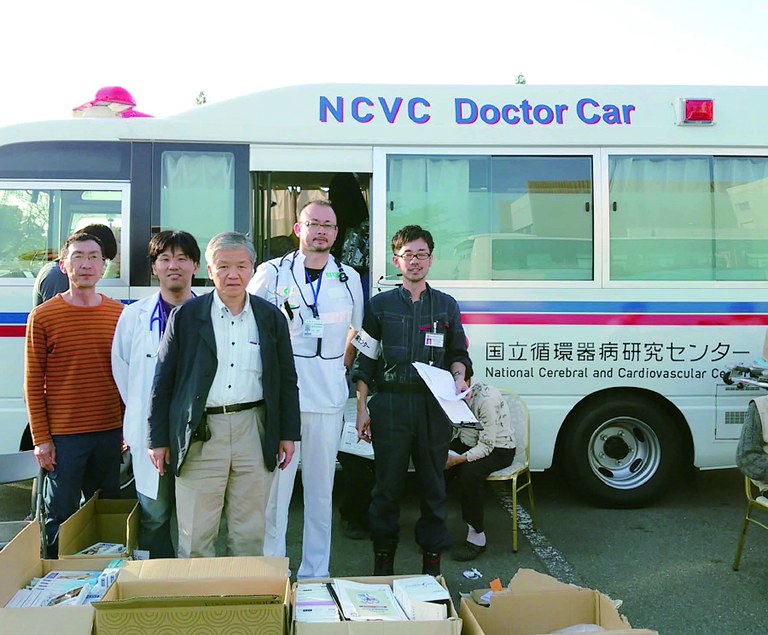
NCVC Team Providing Emergency Medical Relief via Doctor Car
That experience taught me a vital lesson: in the face of a large-scale disaster, strong centralized leadership is indispensable to coordinate the various relief teams arriving from across the country. As the only comprehensive university in the prefecture with a university hospital, and as a hub for disaster prevention research—led by experts like Vice-President Yukiko Takeuchi—Kumamoto University has a duty to lead. We must listen to diverse perspectives, make informed predictions, and take decisive action. On this 10-year milestone, we renew our pledge to fulfill this responsibility.
From Recovery to "Build Back Better" As a physician specializing in cardiovascular medicine, I see a clear parallel between medical care and disaster management. In medicine, we focus on the "acute phase" (the immediate aftermath) and the "chronic phase" (the long-term recovery). Both are equally critical. For Kumamoto University, the past ten years of the "chronic phase" have been a period of unprecedented growth. We have not simply aimed to return to the way things were; we have strived to become better. This is evidenced by the establishment of the School of Informatics, the Semiconductor Device Program of Faculty of Engineering in 2024, followed by this year’s new School of Social Innovation.
Our Mission: A Stronger, More Resilient Region Currently, Kumamoto is experiencing a surge in the semiconductor industry. However, our vision extends beyond semiconductors alone. We must leverage this momentum to create diverse new businesses and a robust industrial foundation. A region supported by a strong economic and educational base is a region that can stand back up with strength, even if struck by a natural disaster.
True recovery has no finish line. By fulfilling our roles in education, research, and social contribution, Kumamoto University will continue to lead the way in creating a resilient society that can overcome any challenge.
Hisao Ogawa President,
Kumamoto University
Our Shared Commitment: Protecting Every Voice in Kumamoto
In the wake of the Kumamoto Earthquake, various organizations were formed in response, with the goal of disaster prevention and reconstruction. One of the most active and distinct among these is KEEP (Kumamoto Earthquake Experience Project), an initiative originally driven by international students to share their perspectives on the disaster.The Origin of KEEP: Why it was Established
KEEP was founded in May 2016, shortly after the devastating Kumamoto earthquakes in April of that year. The project emerged from the significant hardships faced by foreign residents during the disaster. Many non-Japanese speakers struggled to access help and reliable information due to language barriers and a lack of prior disaster training. The original idea for the project came from Professor Shinya Ueno, who was teaching public policy at Kumamoto University at the time. All the students who would go on to form KEEP were in his class, and it was his suggestion that they create a project to record people’s disaster experiences. Among those students was Andrew Mitchell, then an international student at Kumamoto University, who now works as a Specially Appointed Assistant Professor in the Institute for Education and Student Affairs and continues to lead KEEP’s activities today.
Core Aims of the Project
- Global Communication: Spreading the personal stories and lessons of those who experienced the earthquake to a global audience in English.
- Policy Improvement: Contributing to the development of better disaster response and public policies specifically tailored for foreign residents.
- Community Bridging: Building lasting connections between the Japanese local community and international residents to work toward a safer future together.
Key Activities and Initiatives
Since its founding, KEEP has developed into a sustained platform for disaster awareness, training, and policy engagement. These activities now span nearly a decade, including engagements with municipalities, organisations, and community groups across Japan:
- Lectures, Workshops and Training: Beginning with its first workshop in July 2016, KEEP has delivered lectures and training sessions across Japan in a variety of institutional and community settings. Recent activities include disaster preparedness training for foreign residents in Kumamoto City (2026), as well as ongoing collaborations with programmes such as Waseda University's Global Leadership Fellows Program.
- Community-Based Engagement: Through initiatives such as JICA-linked projects and local outreach in Kumamoto, KEEP has worked directly with Nepali, Vietnamese, Filipino, and other communities to strengthen connections with disaster response organisations.
- Capacity Building: Workshops on 'Easy English' and simplified Japanese have been conducted for volunteers and officials to improve communication in emergencies.
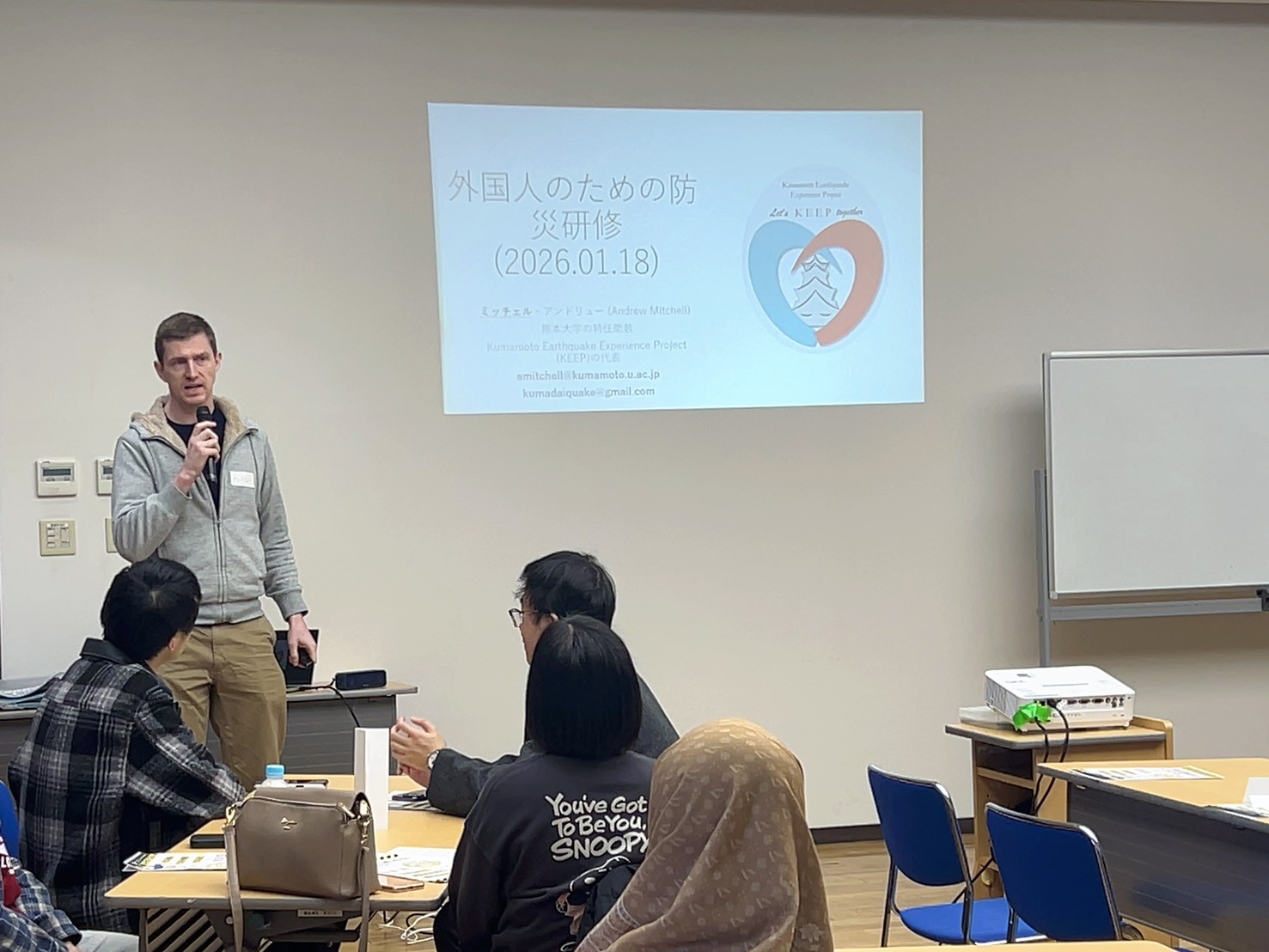
Empowering International Communities through Disaster Preparedness Training (January 2026)
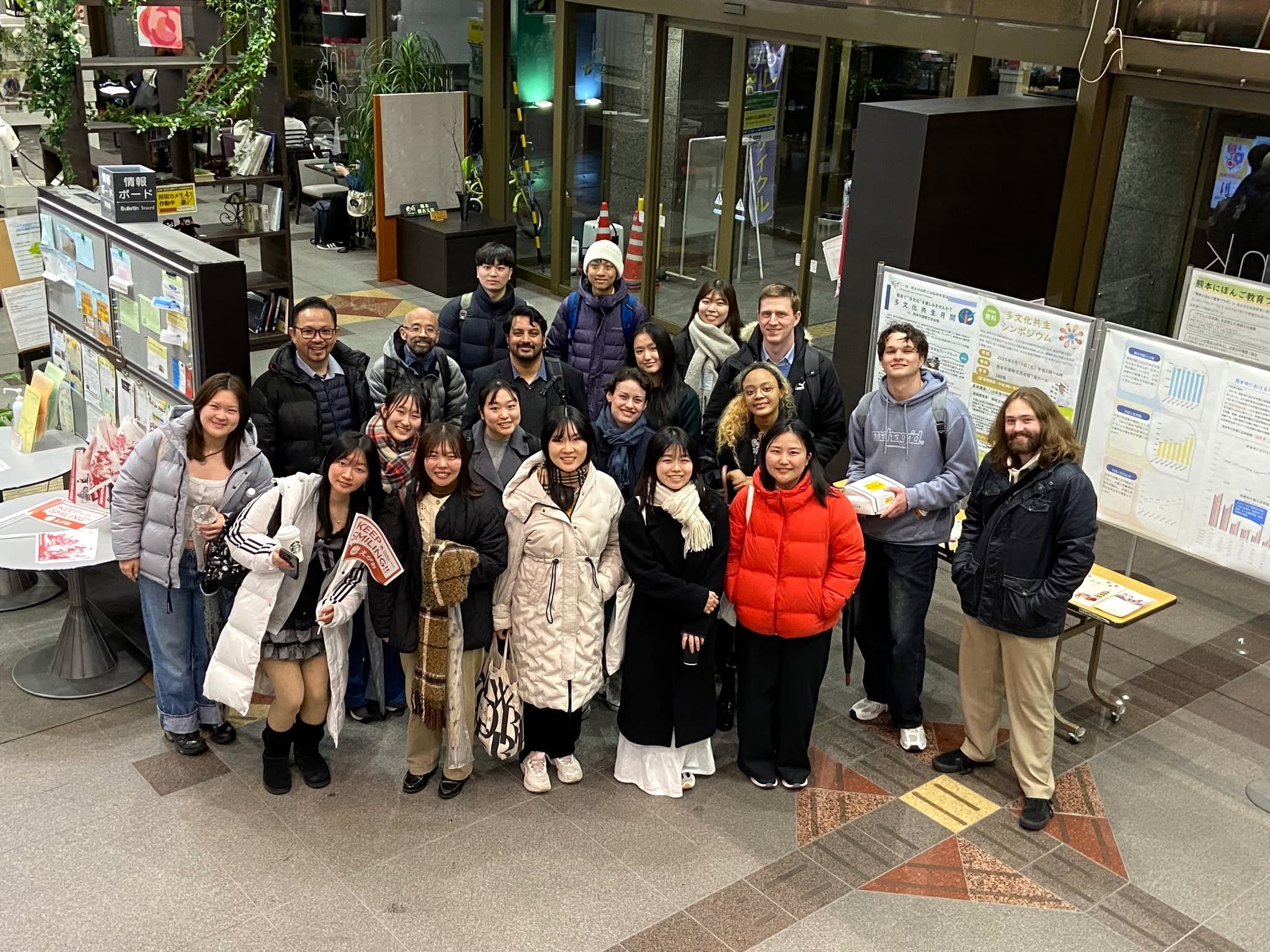
A presentation for students in Waseda University's Global Leadership Fellows Program (February 2025)
Digital Outreach
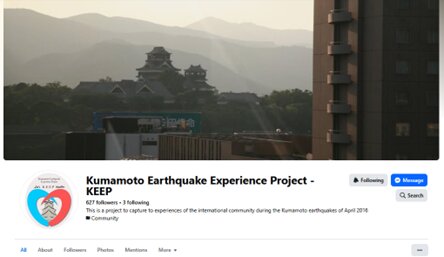
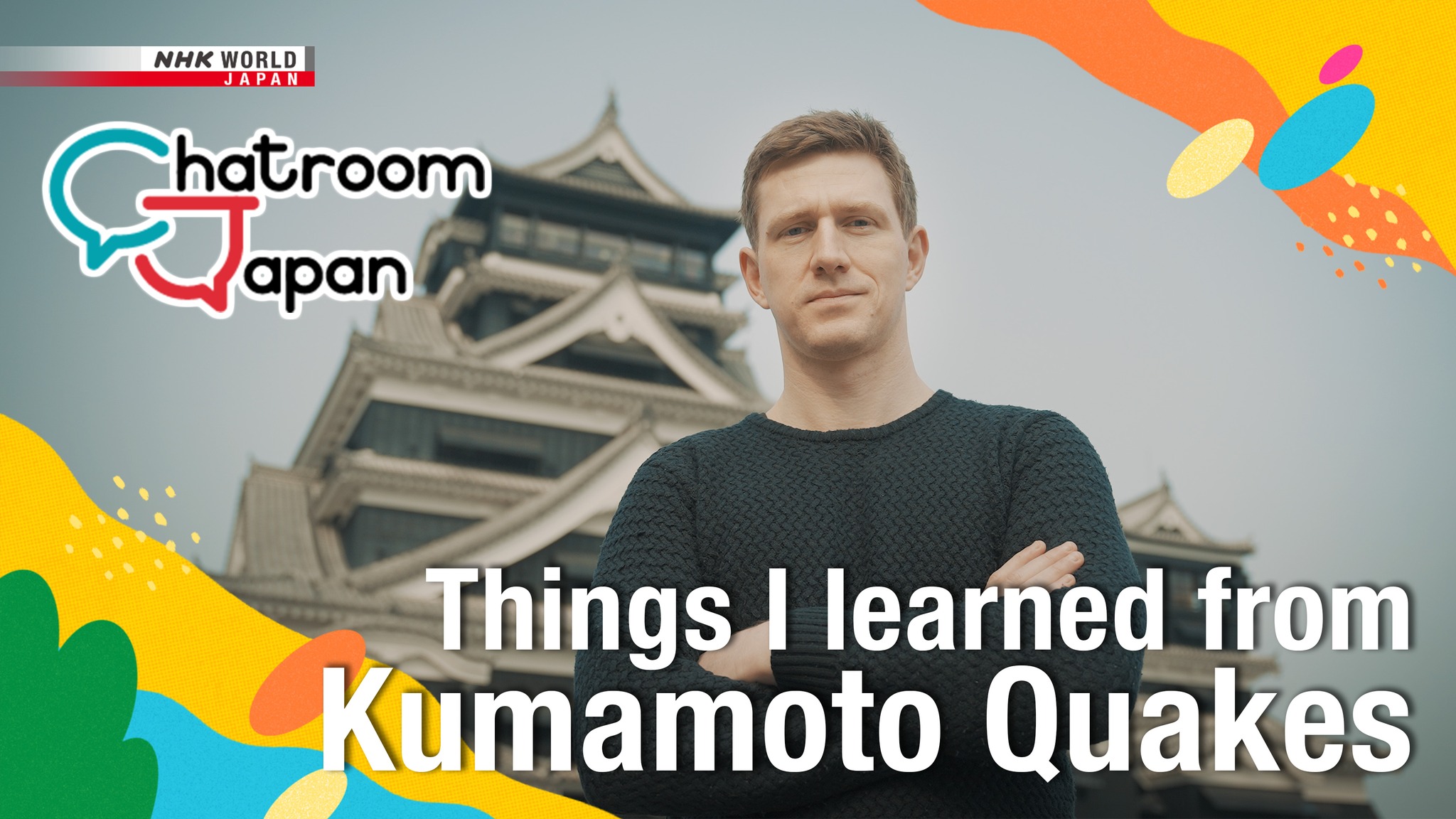
To reach a wider audience, the team launched a Facebook page and a dedicated WordPress website, as well as an Instagram page, to share essays, photos, and updates on KEEP’s activities over time.
Spreading Awareness Through the Media
- The KEEP Booklet: A comprehensive booklet was created and released for the 1st anniversary of the earthquakes, featuring information about the disaster, essays by affected residents, and an analysis of disaster questionnaires. It can be downloaded for free here
- Media Appearances: KEEP’s activities have been covered in print and broadcast media by outlets including the Kumamoto Nichinichi Shimbun, NHK and NHK World, the Mainichi Shimbun, Yomiuri Shimbun, Yahoo News, and the BBC.
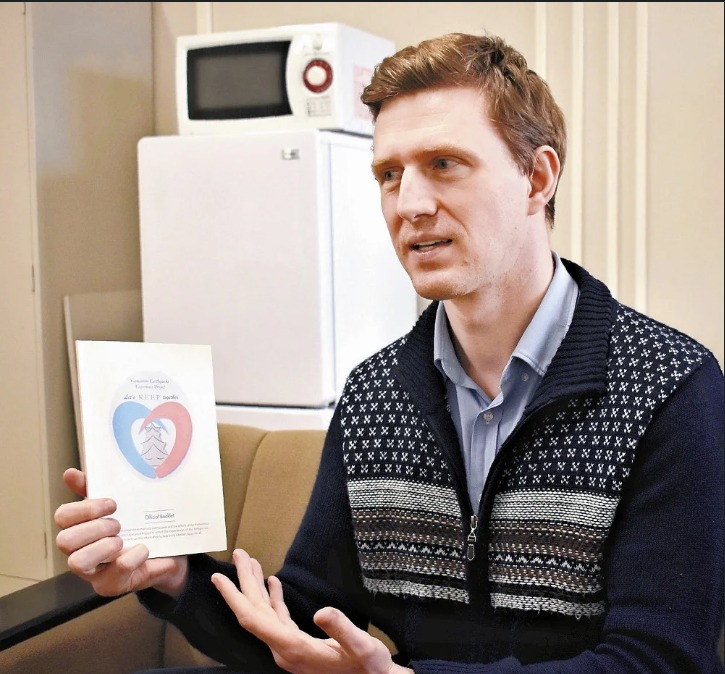
KEEP leader Andrew Mitchell Presenting the Booklet
The Symbolism of Commitment
The project's commitment is captured in its logo: a heart formed by two helping hands of different colours. These hands represent the local and international communities coming together to protect Kumamoto Castle—a symbol of the city's suffering and its resilience. Their motto remains: "Let’s KEEP Together!". KEEP’s second message is equally enduring: “You can’t predict, you can’t prevent, but you can prepare.”
As Kumamoto approaches the 10th anniversary of the earthquakes, the social context in which disasters occur has changed significantly. The number of international residents has increased rapidly, reflecting broader demographic and economic shifts across Japan.
In this context, the work of KEEP highlights the importance of incorporating diverse perspectives into disaster preparedness and response. By documenting experiences, engaging with communities, and contributing to educational and policy discussions, KEEP functions as a bridge between international residents and local institutions.
Rather than treating foreign residents as peripheral, KEEP’s activities emphasise their role as active participants in building a resilient society. Through this approach, the project contributes to a more inclusive model of disaster preparedness—one that recognises diversity as a central condition of contemporary Japan.
Advancing Safety Through Science: The Role of Research in Sustaining Long-Term Recovery
Ten years after the Kumamoto Earthquake, our commitment to the community extends beyond physical reconstruction and volunteerism; it is deeply embedded in our academic mission. Our researchers are transforming the painful lessons of 2016 into innovative solutions to protect lives in future disasters.
Engineering Logistics for Human Welfare
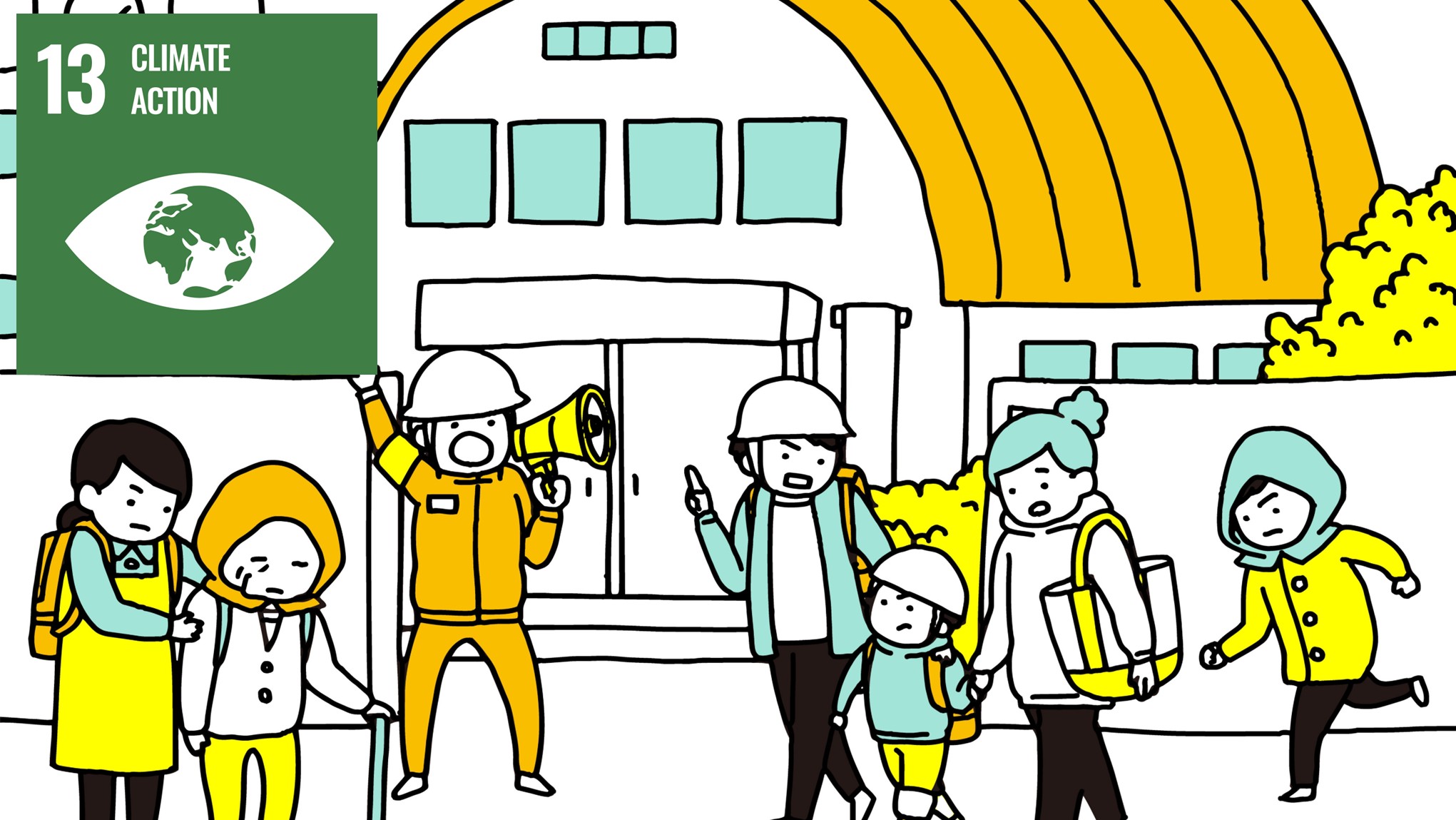
A cornerstone of this "research-based support" is the work of Associate Professor Hiroshi Okajima. Drawing from his own experience as an evacuee in 2016, his team developed a sophisticated mathematical model that accurately predicts the shifting needs of shelter populations. By analyzing infrastructure damage and household stockpiling data, this tool provides local governments with a reliable foundation for optimizing aid distribution. It ensures that during the critical hours following an earthquake, resources reach those who need them most, minimizing the secondary chaos of supply shortages.
Engineering Logistics for Human Welfare
A cornerstone of this "research-based support" is the work of Associate Professor Hiroshi Okajima. Drawing from his own experience as an evacuee in 2016, his team developed a sophisticated mathematical model that accurately predicts the shifting needs of shelter populations. By analyzing infrastructure damage and household stockpiling data, this tool provides local governments with a reliable foundation for optimizing aid distribution. It ensures that during the critical hours following an earthquake, resources reach those who need them most, minimizing the secondary chaos of supply shortages.
Preserving Heritage and Identity
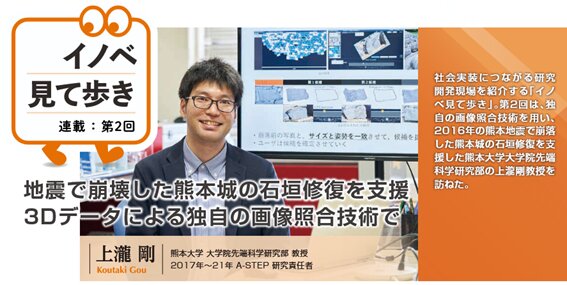
Recovery is not only about the future but also about protecting the past. Professor Gou Koutaki has spearheaded a unique technological solution for the restoration of Kumamoto Castle. His team developed an "Ishigaki (Stone Wall) Matching System," an innovative digital tool that helps experts identify and reassemble the thousands of fallen stones from the castle's historic ramparts. This fusion of image processing and traditional craftsmanship has been vital in restoring the city’s symbolic heart.
Similarly, Professor Tsuguharu Inaba and the Eisei-Bunko Research Center led "Cultural Property Rescue" activities. By salvaging historical documents and artifacts from damaged private homes and local shrines, the university helped preserve the "soul" of Kumamoto’s history, ensuring that the disaster did not erase the cultural identity of the region.
Healing the Social Fabric
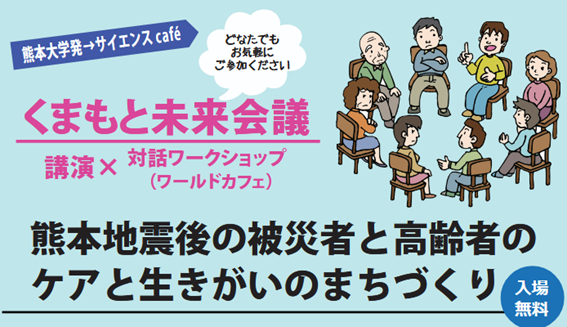
The scars of a disaster are often invisible. Associate Professor Akiko Ishihara has focused on the human dimension of recovery through dialogue. Following the earthquake, she facilitated "Restorative Dialogue" workshops and conflict prevention programs. These sessions provided essential psychological care and helped community members navigate the interpersonal tensions that often arise during long-term displacement, fostering a social environment where collective healing could occur.
Protecting Natural Resources and Life Sciences
Kumamoto is famous for its groundwater, a resource that was threatened by the seismic shifts of 2016. Researchers such as Associate Professor Haruhiko Nakada and Professor Takahiro Hosono conducted extensive groundwater surveys as part of the Kumamoto Reconstruction Support Project. Their work ensured the safety and sustainability of the city’s water supply, a critical element for both daily life and local industry.
Within our laboratories, the Institute of Molecular Embryology and Genetics (IMEG) demonstrated remarkable agility. Under the leadership of then-Director Ryuichi Nishinakamura, the institute responded immediately to protect vital biological research. Building on that experience, IMEG developed and published comprehensive manuals for seismic retrofitting of laboratory equipment—safety standards that are now shared with the global scientific community to prevent research loss in future disasters.
A Hub for Disaster Medicine
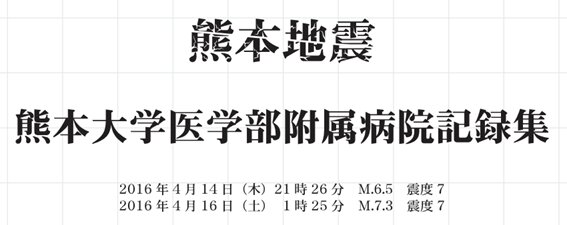
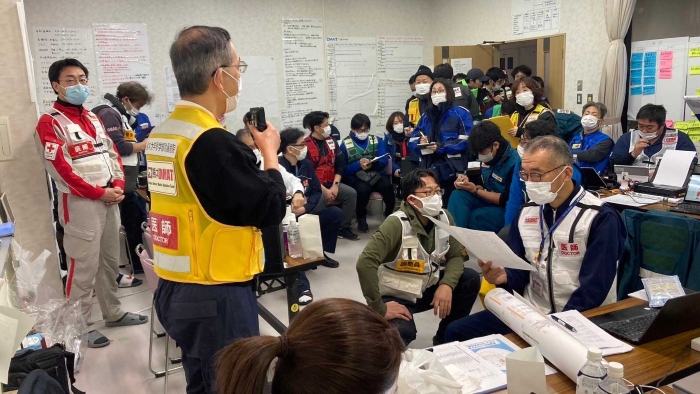
Kumamoto University Hospital serves as a critical bastion for the region’s health. In the aftermath of the quakes, the hospital was instrumental in maintaining specialized services, including pediatric care, under extreme conditions. This experience led to the formalization of the Disaster Medical Education and Research Center, a rare institution in Japan featuring faculty dedicated exclusively to disaster medicine. Beyond training professionals and educating the public, the Center actively manages real-world crises, such as the 2020 July Torrential Floods and the 2024 Noto Peninsula Earthquake. During the Noto response, our experts led the Health and Medical Welfare Coordination Headquarters, optimizing the deployment of medical teams and improving evacuation center assessments. By integrating these field-proven "lessons learned" into our curriculum, the Center ensures that our medical response system is not only more robust but also uniquely equipped to maintain essential healthcare and logistical coordination during the next "Big One."
Kumamoto is famous for its groundwater, a resource that was threatened by the seismic shifts of 2016. Researchers such as Associate Professor Haruhiko Nakada and Professor Takahiro Hosono conducted extensive groundwater surveys as part of the Kumamoto Reconstruction Support Project. Their work ensured the safety and sustainability of the city’s water supply, a critical element for both daily life and local industry.
Within our laboratories, the Institute of Molecular Embryology and Genetics (IMEG) demonstrated remarkable agility. Under the leadership of then-Director Ryuichi Nishinakamura, the institute responded immediately to protect vital biological research. Building on that experience, IMEG developed and published comprehensive manuals for seismic retrofitting of laboratory equipment—safety standards that are now shared with the global scientific community to prevent research loss in future disasters.
A Hub for Disaster Medicine
Kumamoto University Hospital serves as a critical bastion for the region’s health. In the aftermath of the quakes, the hospital was instrumental in maintaining specialized services, including pediatric care, under extreme conditions. This experience led to the formalization of the Disaster Medical Education and Research Center, a rare institution in Japan featuring faculty dedicated exclusively to disaster medicine. Beyond training professionals and educating the public, the Center actively manages real-world crises, such as the 2020 July Torrential Floods and the 2024 Noto Peninsula Earthquake. During the Noto response, our experts led the Health and Medical Welfare Coordination Headquarters, optimizing the deployment of medical teams and improving evacuation center assessments. By integrating these field-proven "lessons learned" into our curriculum, the Center ensures that our medical response system is not only more robust but also uniquely equipped to maintain essential healthcare and logistical coordination during the next "Big One."
From the digital reconstruction of castle walls to the mathematical modeling of human behavior, Kumamoto University’s research portfolio reflects a holistic approach to disaster science. We do not merely study the earthquake as a past event; we treat it as a catalyst for a safer future. Ten years on, our researchers continue to stand at the forefront of disaster prevention and mitigation, proving that through science, we can transform tragedy into a legacy of protection and hope.
Closing Message: The Three Pillars of Essential Disaster Preparation
By Prof. Yukiko Takeuchi, Vice President for Disaster Prevention and Safety ManagementAs we reflect on the ten years since the 2016 Kumamoto Earthquake, we see a university that has grown significantly in its technical and scientific capacity to handle disasters. However, the true value of our research lies not in data alone, but in how it empowers each individual within our community to protect themselves and one another.
Information as the Foundation of Preparation
In my work, I always emphasize three pillars of fundamental disaster prevention: Information, Assets, and Connections.
While most people immediately think of "Assets"—such as preparing an emergency go-bag—I believe that "Information" must come first. Before you pack a bag, you must understand the specific risks you face. This begins with studying hazard maps and the historical disaster records of your local area.
True preparation requires a deeper level of inquiry: What happened to people in my same generation or life stage during past disasters? If you have children, how did other parents cope? If you are a caregiver for elderly family members, what were their specific challenges? How did others manage their professional responsibilities? When you seek out this specific, personal information, the contents of your emergency kit and your stockpiles will naturally evolve to meet your actual needs.
Redefining Action Through Knowledge
Disaster response is not just about "going to a shelter." If you understand the realities of shelter life and feel it may not be suitable for your family, you should consider alternatives, such as staying in your vehicle.
However, simply having a car is not enough. You must proactively acquire the knowledge of what supplies are required for vehicle-based evacuation and where safe parking locations are situated. We must move beyond generic checklists and execute Asset Preparation based on a foundation of solid Information Preparation.
Redefining Connections Through "Tasukeai" (Mutual Support)
Finally, we must prepare through "Connections." The 2016 earthquake reminded us all of the vital importance of Tasukeai—the vital spirit of mutual aid. However, true resilience does not appear in an instant when a crisis hits. You must consider daily who you can rely on and who you might be able to help, and then work to actively build those intentional relationships now. Whether in local neighborhoods or within our university campus, we are fundamentally safer together.
This is the central philosophy of a student-led organization that is very dear to my heart: Kumasukegumi. Founded in 2007, and for which I am honored to serve as an advisor, Kumasukegumi is a recognized disaster volunteer circle within the Faculty of Engineering. This group has never stopped learning. They prepare daily by studying what it means to be a volunteer and what a disaster area truly requires.
The Power of Prepared Connections: A Case Study from 2016
During the chaotic early hours of the 2016 Kumamoto Earthquake, Kumasukegumi demonstrated the true power of this prepared connection. They were initially assigned to help with the evacuation shelters on our campus. However, knowing that other student groups were also present and providing excellent aid, the members made a critical, well-informed decision.
They chose to move away from our university shelters and re-deploy themselves to the Kumamoto City Social Welfare Council to provide much-needed support where volunteer resources were extremely low. This was not a random or easy choice; it was possible only because these students had made a daily commitment to study disaster prevention, and they already understood the complexities of effective volunteer logistics. Their goal—then and now—is to understand the terrain, the risks, and themselves, enabling them to provide support that is not only impactful but also safe, sustainable, and does not sacrifice their own well-being
Our Future Commitment: Connecting "Tasukeai" Across Generations
As we look forward to the next ten years, the need for this kind of organized, prepared connection is more critical than ever. Our commitment to Tasukeai must be strong enough to support a globalizing Kumamoto, whose international population has nearly tripled since the 2016 earthquake.To ensure this spirit continues and that students like those in Kumasukegumi have a sustainable and safe platform for their activities, we must empower them. Creating opportunities for them to continue learning and providing them with the necessary equipment and essential safety measures, such as proper insurance, is a shared responsibility of our entire community.
To fund this work, we have launched a special crowdfunding campaign: "Connecting Tasukeai to the Future – Kumasukegumi's 20th Anniversary!"
This campaign is not just about funding; it is about investing in the students who will protect our globalizing community and champion a culture of resilient safety. Your support helps transform their passion into a sustainable future of preparedness for everyone in Kumamoto. By supporting them, you help us to connect the spirit of Tasukeai across generations. Thank you for your continued dedication to building a safer, more prepared home, together.
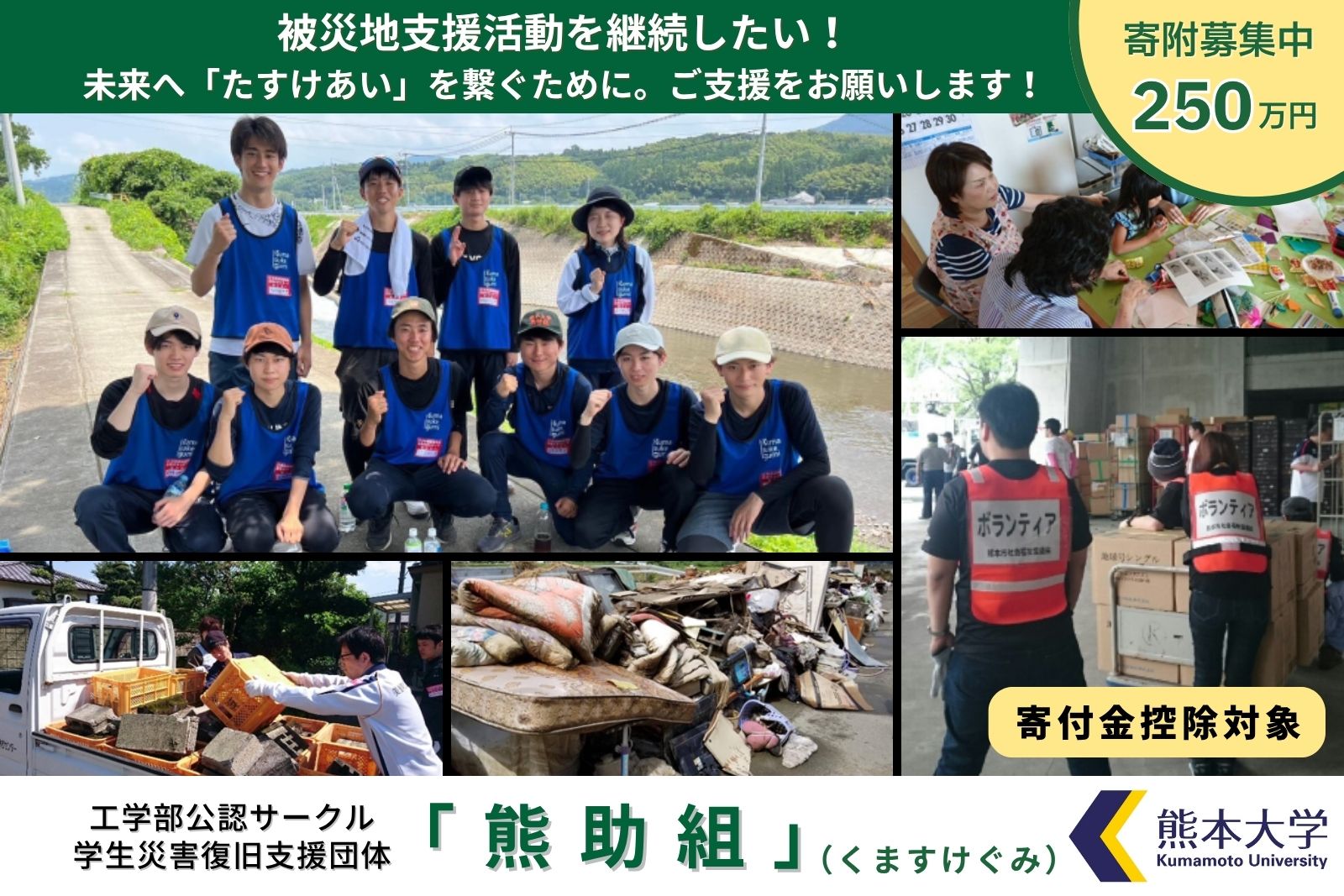
Support the Kumasukegumi Crowdfunding Campaign Here
(Campaign Period: Jan 13, 2026 – May 11, 2026)
(Campaign Period: Jan 13, 2026 – May 11, 2026)