Kumamoto University Hosts Advanced Semiconductor Seminar Series Featuring Leading Experts from Taiwan
Researchers and industry leaders from Taiwan share insights into cutting-edge semiconductor technologies, industrial innovation, and opportunities for international academic collaboration.In early November 2026, Kumamoto University welcomed distinguished researchers and experts from Taiwan for a series of lectures under its Advanced Semiconductor Seminar Series, held on November 5, 6, and 9. Bringing together leading figures from academia and industry, the seminars explored the latest developments in semiconductor technologies, advanced research, and industrial strategy.
As Kumamoto emerges as a major center of Japan's semiconductor industry, strengthening academic and industrial partnerships with Taiwan, one of the world's leading semiconductor hubs, has become increasingly important. The seminars provided valuable opportunities for students, faculty members, and researchers to exchange knowledge, gain international perspectives, and explore potential areas of future collaboration.
Advanced Semiconductor Packaging: Technologies for the Next Generation
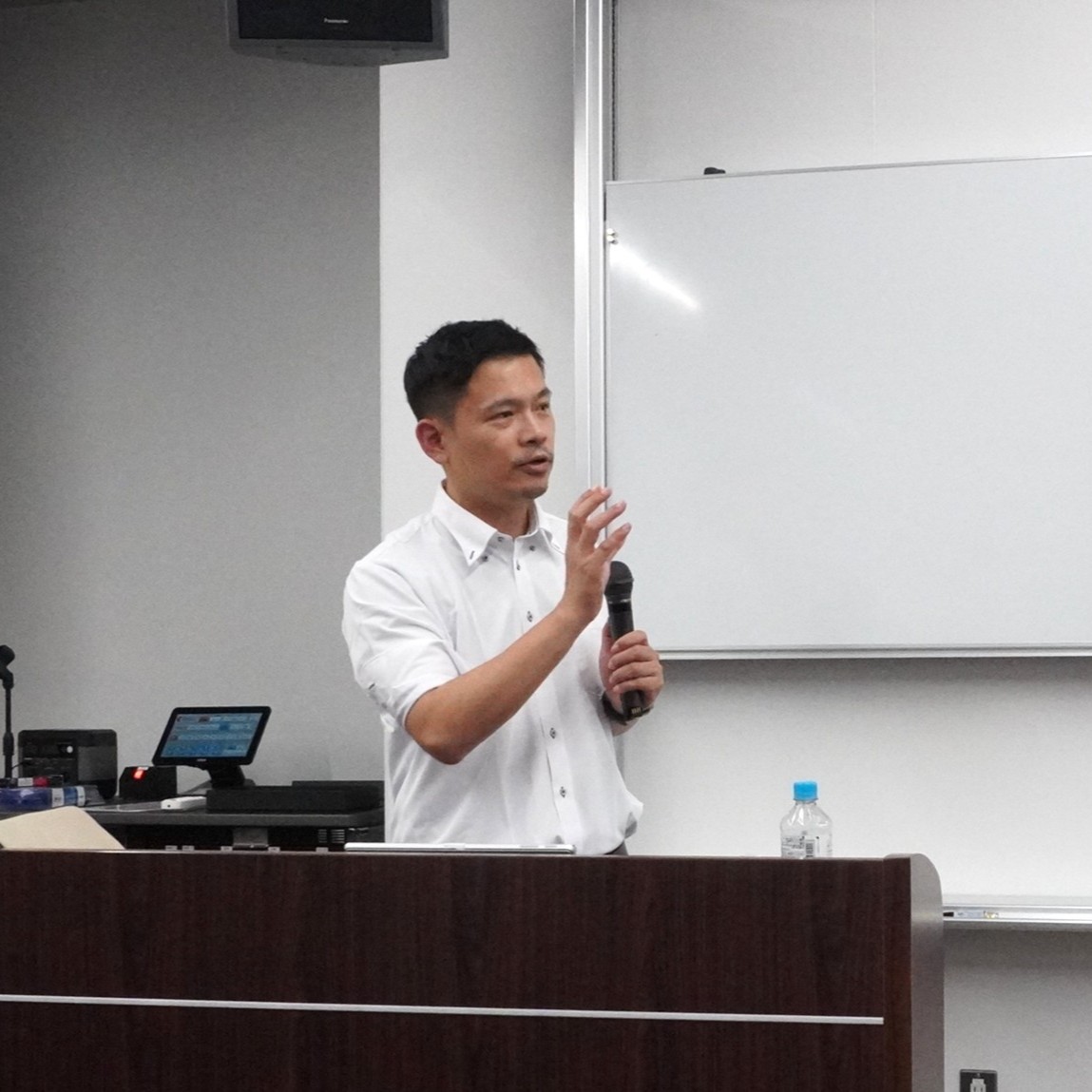
The first lecture, held on November 5, was delivered by Professor Jun Mizuno of the Academy of Innovative Semiconductor and Sustainable Manufacturing (AISSM), National Cheng Kung University (NCKU), Taiwan. Titled "Advanced Packaging and Its Challenges," the lecture focused on the growing importance of advanced packaging in meeting the demands of artificial intelligence (AI) and high-performance computing (HPC).
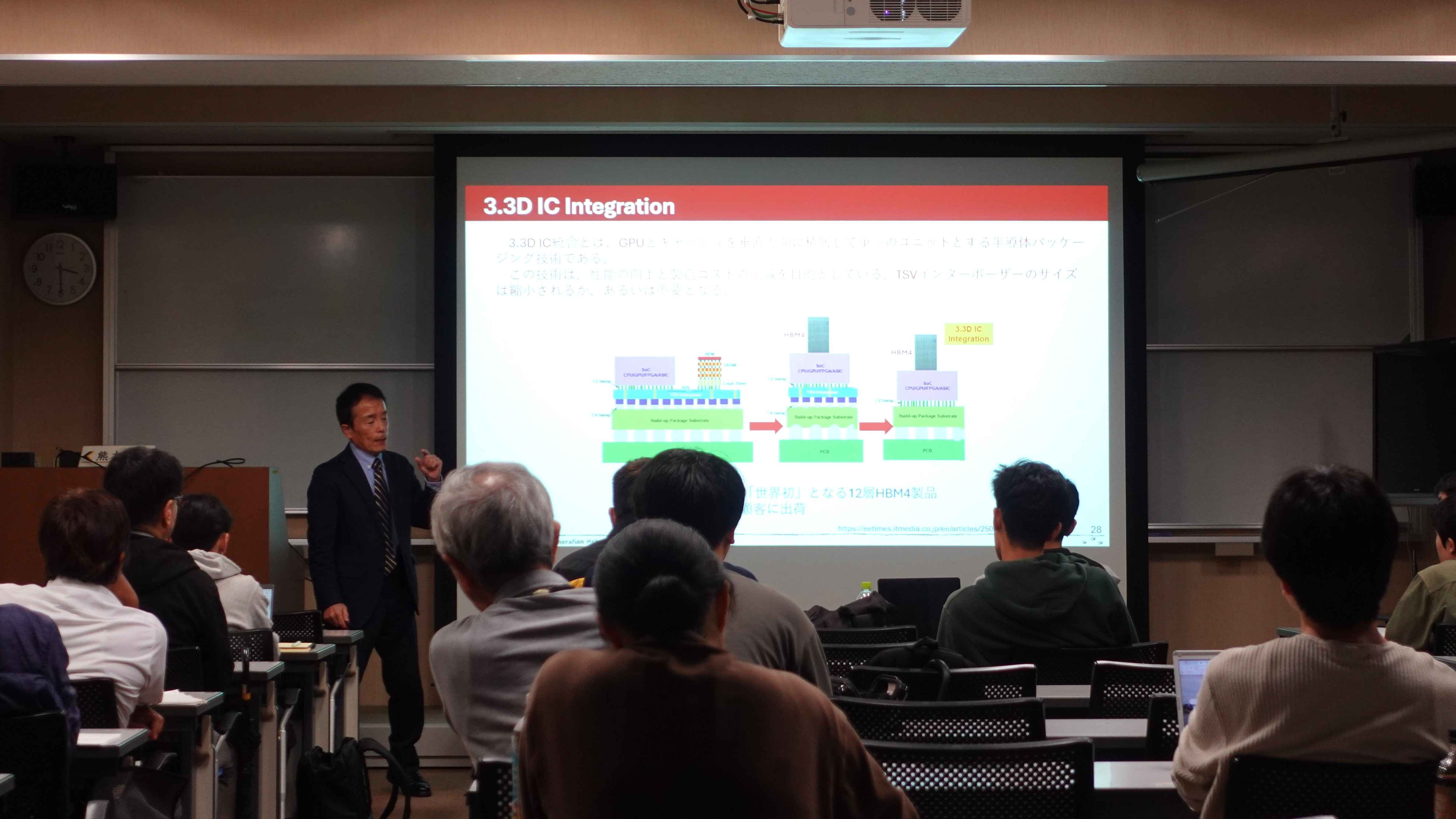
Professor Jun Mizuno Delivering His Lecture
Professor Mizuno specializes in advanced heterogeneous integration, a key technology for combining different types of semiconductor chips to achieve higher performance and greater integration. In 2026, he also assumed the position of Visiting Professor at Kumamoto University, further strengthening the academic relationship between the two institutions.
His research involves collaboration with companies and research institutions in Japan and Taiwan, covering technologies such as through-silicon vias (TSVs), thermal management using microchannels and vapor chambers, hybrid bonding, advanced bonding techniques, three-dimensional X-ray computed tomography (3D X-ray CT), and innovative wafer-cleaning technologies.
In his presentation, Professor Mizuno explained the evolution of semiconductor packaging from conventional two-dimensional (2D) structures to more sophisticated architectures, including 2.5D packaging using interposers, 3D packaging involving vertical chip stacking, and emerging 3.5D integration approaches. He also introduced chiplet technology and heterogeneous integration as promising solutions to the limitations of conventional single-chip designs. These technologies are expected to play an increasingly important role in next-generation semiconductor development.
Artificial Electromagnetic Materials: New Possibilities for Sensing and Communication
On November 6, Professor Chung-Tse Michael Wu of the Department of Electrical Engineering, National Taiwan University (NTU), delivered a lecture entitled "Sensing, Tracking, and Secured Communication with Artificial Electromagnetic Materials."
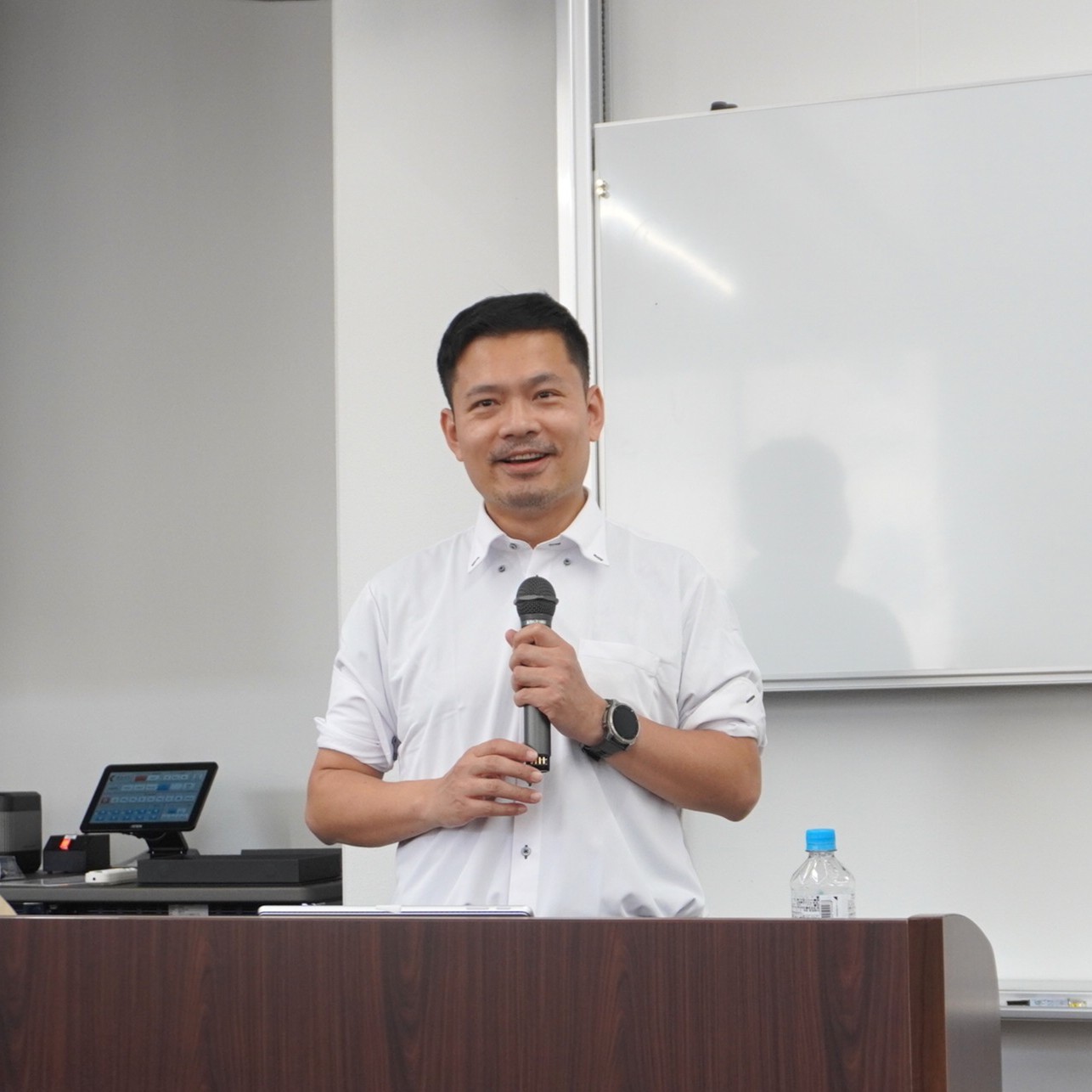
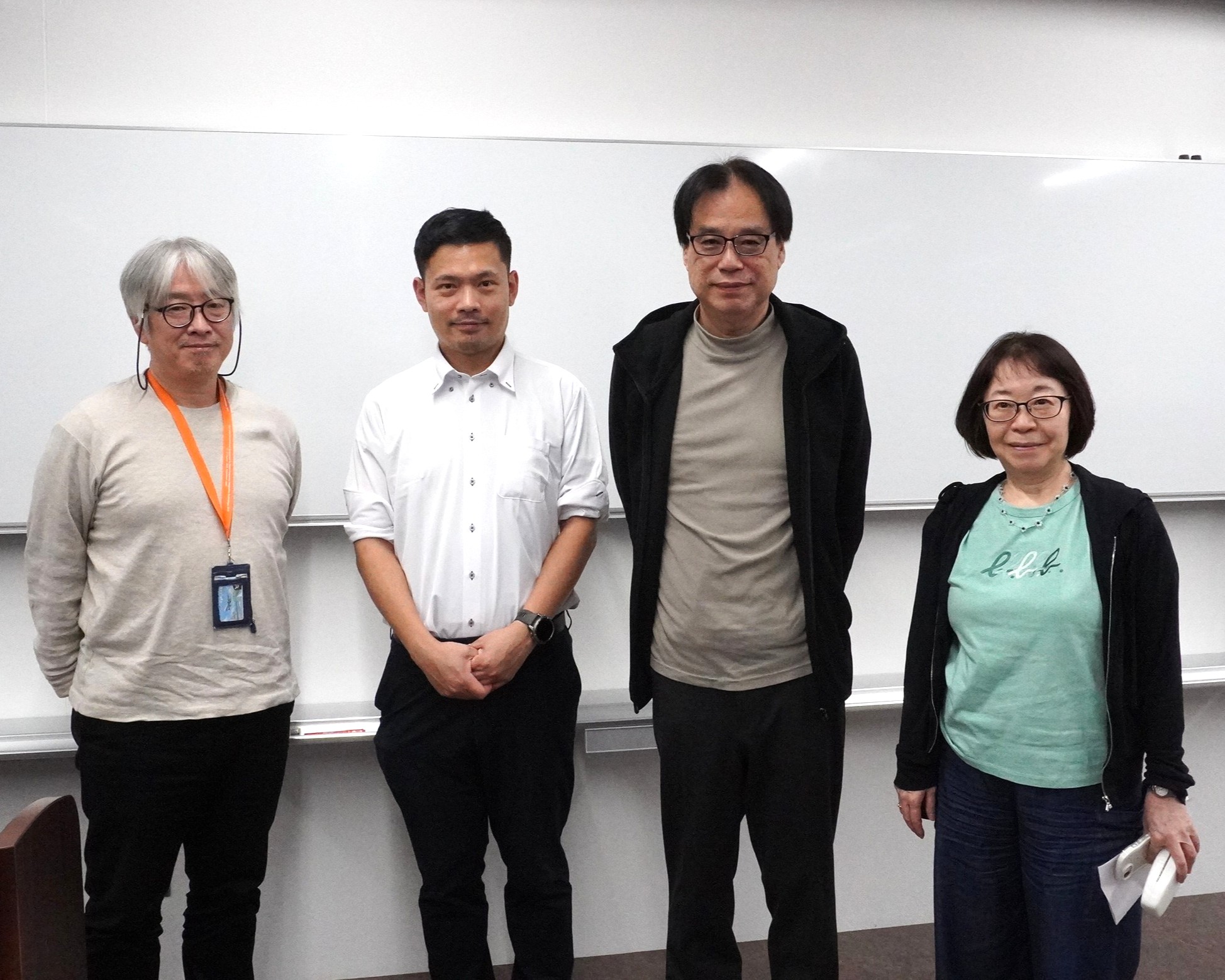
Professor Chung-Tse Michael Wu Delivering His Lecture (left) and Meeting with Faculty Members of Kumamoto University (right)
Professor Wu specializes in applied electromagnetics, antennas, and microwave and millimeter-wave technologies. After earning his Ph.D. from the University of California, Los Angeles (UCLA), he held academic positions at several U.S. universities before joining NTU in 2024. His achievements include the prestigious NSF CAREER Award and DARPA Young Faculty Award.
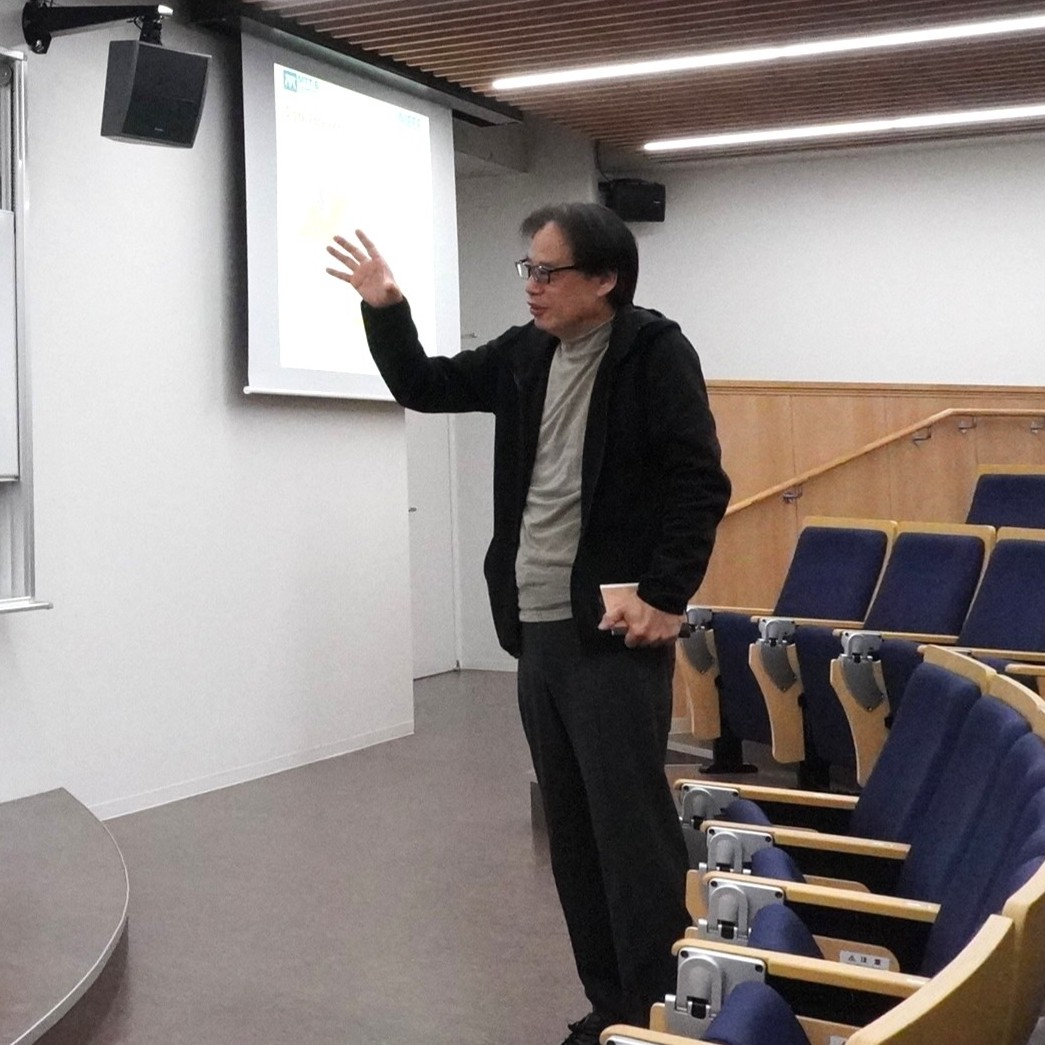
Professor Chung-Tse Michael Wu in Discussion with Professor Takeshi Fukusako of Kumamoto University
In his lecture, Professor Wu explored how metamaterials—artificially engineered materials with unique electromagnetic properties—can enable advanced sensing and communication technologies. Focusing on specialized antennas, he demonstrated their potential applications in object tracking, vital-sign monitoring, and microwave imaging. He also introduced research on secure wireless communication and high-frequency radar sensors using advanced semiconductor technology, highlighting new possibilities for highly sensitive and high-resolution sensing.
Taiwan's Semiconductor Industry: Research, Innovation, and Global Leadership
On November 9, two distinguished experts provided complementary perspectives on semiconductor research, industrial development, and business strategy.
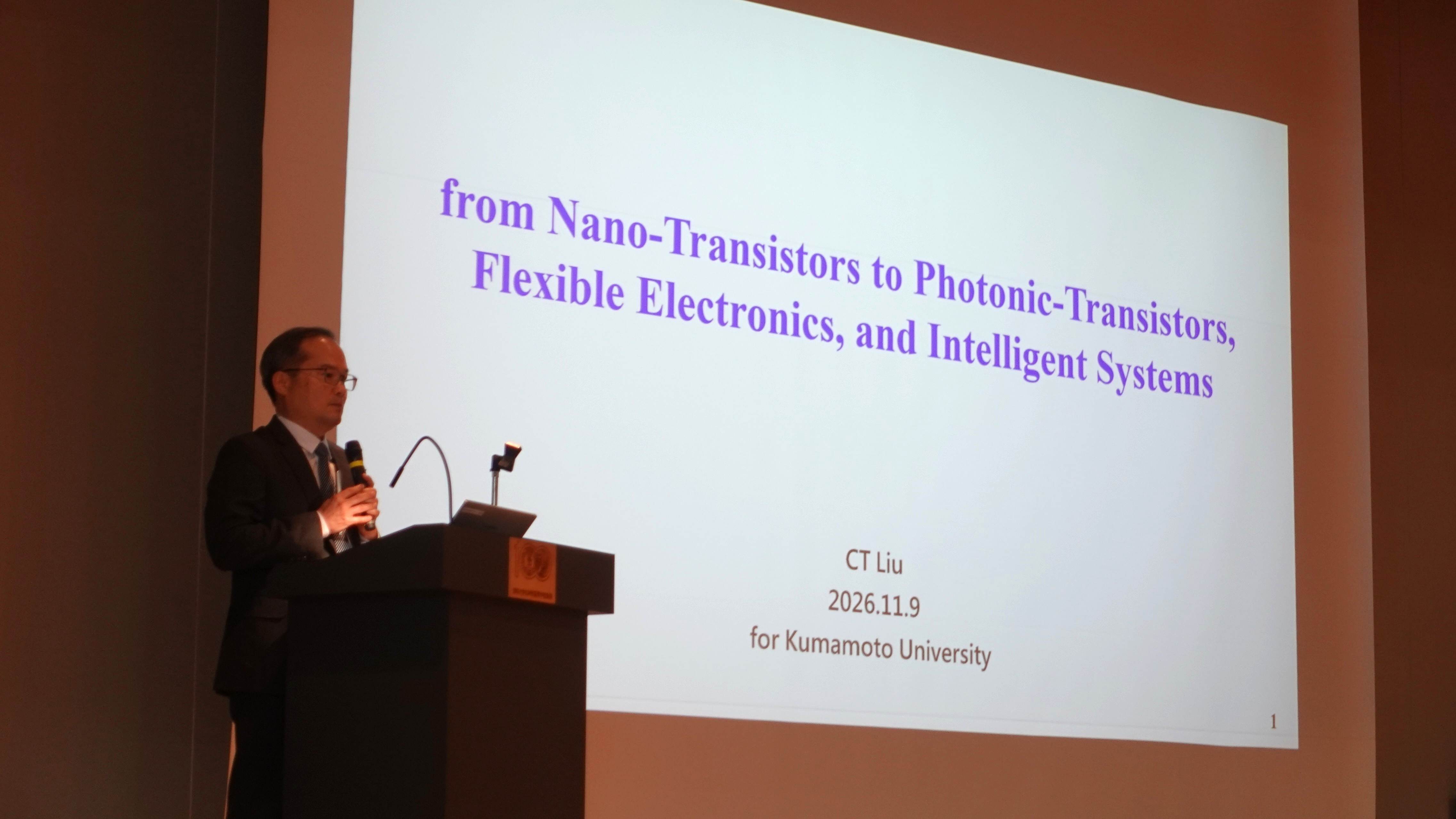
Professor CT Liu Delivering His Lecture
The morning lecture was delivered by Professor CT Liu, former Senior Director of Research and Development at Taiwan Semiconductor Manufacturing Company (TSMC) and former Executive Vice President of Taiwan's Industrial Technology Research Institute (ITRI). He currently serves as an adjunct professor at National Taiwan University and National Tsing Hua University, bringing extensive experience in semiconductor research and development, corporate management, and industry–academia collaboration.
In his lecture, Professor Liu explored four areas of technological innovation: nano-transistors and system-on-a-chip (SoC) technologies, photonic transistors, flexible electronics, and intelligent systems. He introduced advances in transistor miniaturization and device performance, as well as photonic technologies that enable the conversion of optical signals into electrical signals within semiconductor chips, potentially improving processing speed and energy efficiency. He also presented emerging applications of flexible electronics, including robotic vision and health monitoring, alongside intelligent healthcare systems that use data-driven technologies to support medical diagnosis and patient care. His presentation highlighted the broad impact of advanced semiconductor research across computing, healthcare, and other high-tech industries.
The afternoon session featured Professor Bang-Ning Hwang, Dean of the College of Management at National Yunlin University of Science and Technology (YunTech), Taiwan. His research and teaching focus on semiconductor business model innovation, supply chain strategy, and high-tech industry management.
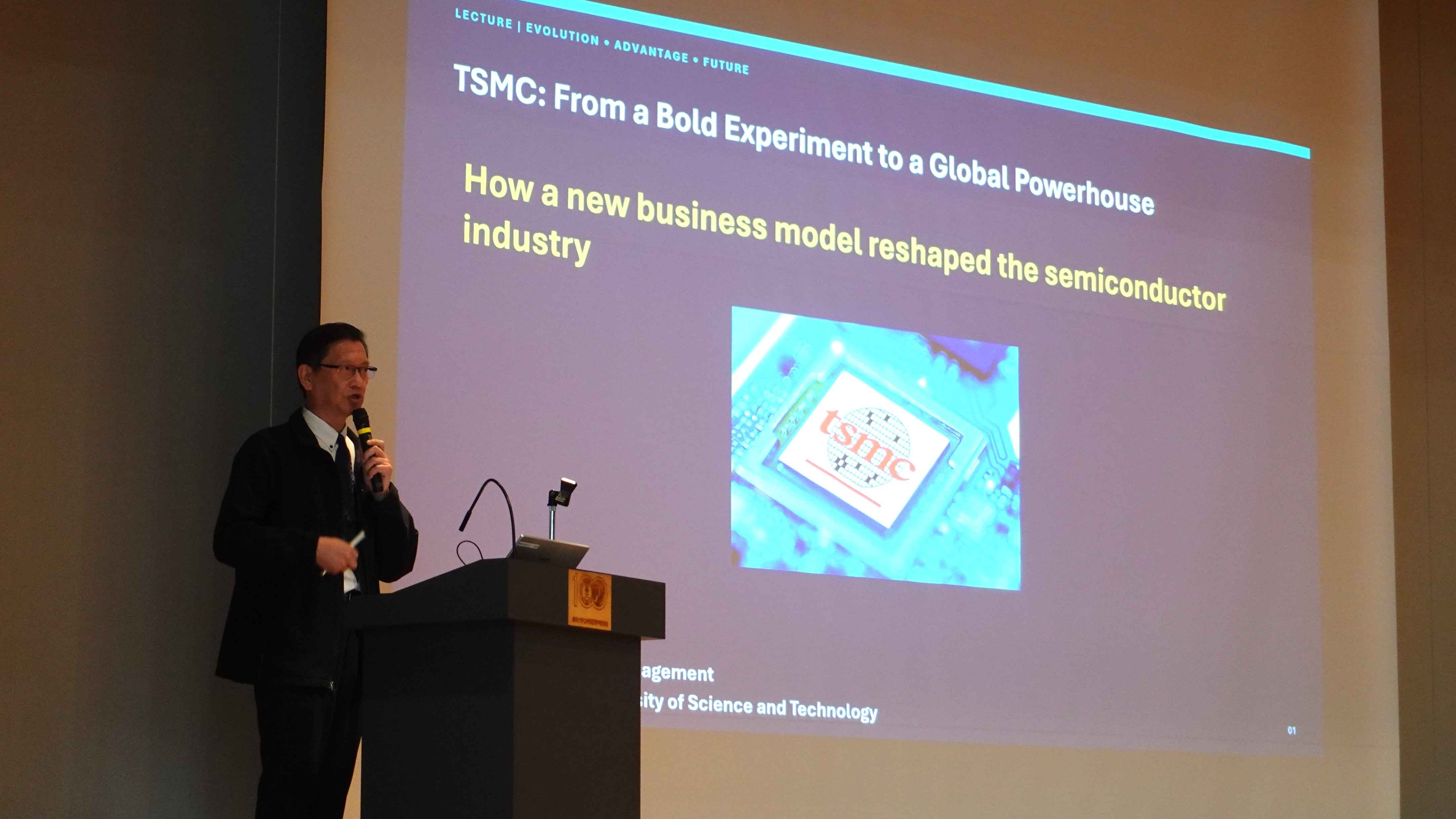
Professor Bang-Ning Hwang Delivering His Lecture
In his lecture, "TSMC: From a Bold Experiment to a Global Powerhouse," Professor Hwang examined how TSMC, founded in 1987, pioneered the pure-play foundry business model and transformed the global semiconductor industry. He discussed the company's key competitive advantages, including business model innovation, technological leadership, manufacturing excellence, customer trust, and the development of an open innovation ecosystem. He also explored TSMC's growing influence on the global semiconductor supply chain and the challenges it faces amid the rapid expansion of artificial intelligence, geopolitical uncertainties, and the globalization of semiconductor manufacturing. His presentation provided valuable insights into how technological excellence and strategic business development have contributed to TSMC's global leadership.
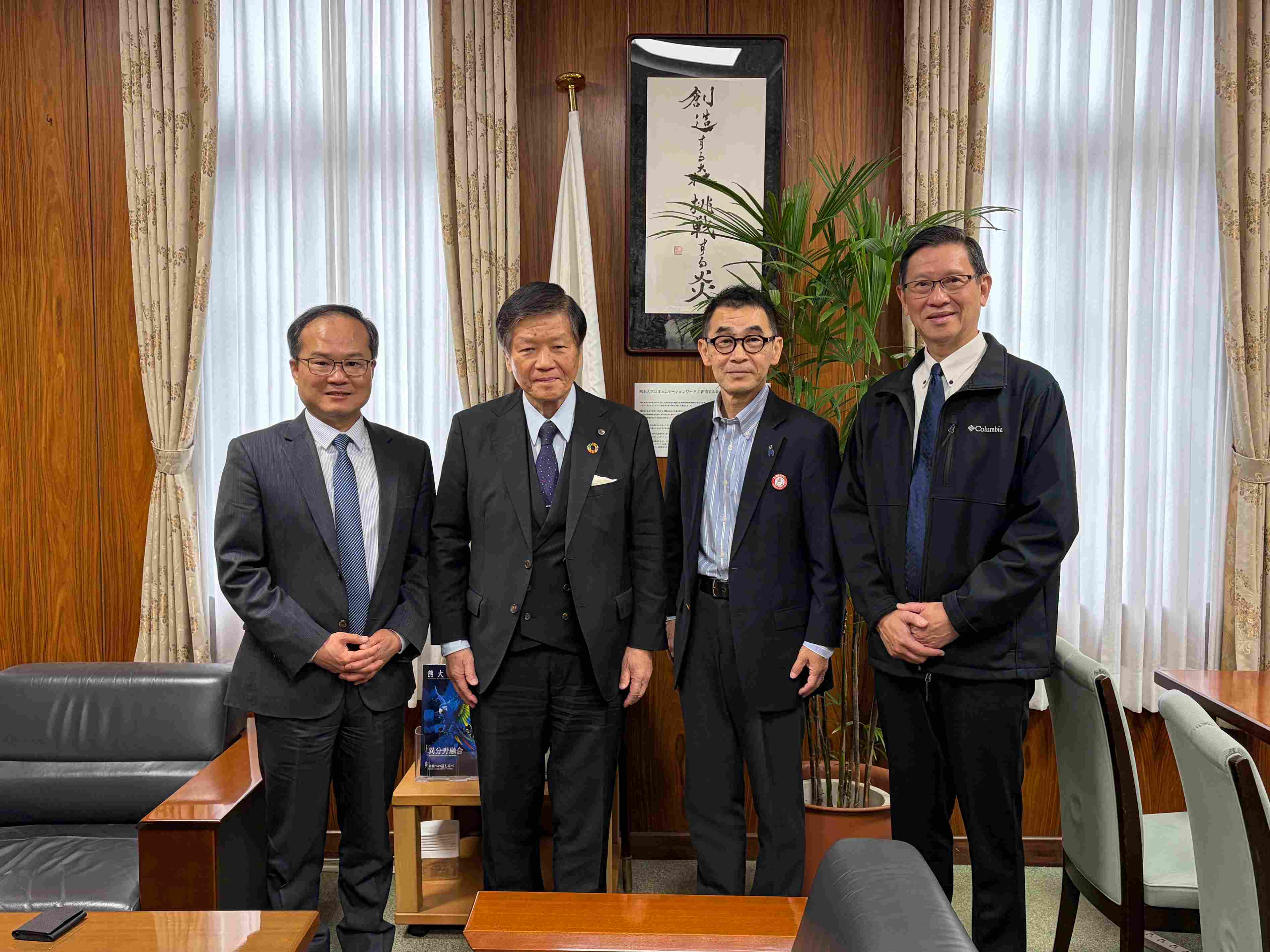
Commemorative Photo with President Hisao Ogawa (center left) and Professor Sadahiro Tsurekawa (center right) of Kumamoto University
Strengthening Taiwan–Japan Collaboration for the Future of Semiconductors
The seminar series highlighted the importance of technological innovation, interdisciplinary research, and industry–academia collaboration in advancing the semiconductor industry. As Kumamoto's semiconductor ecosystem continues to grow, Kumamoto University will continue to promote strategic partnerships with institutions in Taiwan, connecting regional research strengths with international expertise to foster joint research, develop global talent, and contribute to semiconductor innovation.