Kumamoto University Hosts Kumamoto–Taiwan Students Summit 2026
Kumamoto University hosted the Kumamoto–Taiwan Students Summit 2026 (KTSS 2026) from October 20 to 23, 2026.The summit was held with support from Higo Bank, Ltd., the Kumamoto Semiconductor Green Innovation Association (KSGI), and other partners. A total of 30 students participated, including 20 from four Taiwanese universities—National Taiwan University (NTU), National Tsing Hua University (NTHU), National Yang Ming Chiao Tung University (NYCU), and National Cheng Kung University (NCKU)—and 10 from Kumamoto University.
Under the theme "Semiconductor + α," students from Japan and Taiwan explored new possibilities for semiconductor technologies and their potential applications in society 20 years from now, exchanging ideas across academic disciplines and cultural backgrounds.
The summit opened on October 20 with welcoming remarks by President Hisao Ogawa and an opening address by Professor Toshihiro Ihara, Dean of the Faculty of Engineering and the Faculty of Advanced Science and Technology. These were followed by lectures delivered by faculty members from Kumamoto University and the participating Taiwanese universities. The lectures covered a wide range of topics, from 3D-stacked integrated circuits and next-generation AI chips to Japan–Taiwan collaboration in semiconductor supply chains. A special lecture by Distinguished Professor Hideki Wakabayashi provided further insights into international semiconductor business models and opportunities for cooperation between Japan and Taiwan.
On October 21, participants visited three semiconductor-related companies—Sony Semiconductor Manufacturing Corporation, Tokyo Electron Limited, and Tera Probe, Inc.—gaining firsthand exposure to Kumamoto's semiconductor industry.
A central feature of the summit was an ideathon-style workshop involving five mixed teams of Japanese and Taiwanese students. During the afternoon of October 20 and the morning of October 22, students worked together in English to explore the question: "How will semiconductors shape the world 20 years from now?" Each team presented its ideas on the afternoon of October 22.
The teams proposed a variety of innovative concepts, including smart contact lens systems integrated with AI, medical nanorobots, autonomous AI assistants, next-generation mobility solutions, and implantable medical ICs. Their presentations addressed not only technological possibilities but also potential applications and challenges for future implementation.
At the closing ceremony following the presentations, Professor Sadahiro Tsurekawa, Vice-Director of the Research and Education Institute for Semiconductors and Informatics (REISI), reflected on the significance of the summit. He emphasized that the future of semiconductors will be shaped not by technology alone, but also by connections across different fields and between people. He expressed his hope that the relationships formed among the students during the summit would lead to future research collaborations and new initiatives.
Reflecting on the experience, a Kumamoto University student commented, "Through exchanging ideas and working in groups in English, I experienced both the challenges and enjoyment of expressing my thoughts." A student from National Yang Ming Chiao Tung University shared, "Since everyone on our team comes from different backgrounds, I got to hear many different perspectives and ideas. It made me realize, 'Oh, this is what real teamwork feels like.'" Another participant from National Cheng Kung University reflected, "We should not only focus on technologies, but also on something equally important, communication and connection."
On the final day, October 23, participants joined a field trip to the Mt. Aso area. Despite rainy weather caused by a typhoon, students experienced Kumamoto's local culture through activities such as soba noodle making and visited the Kumamoto Earthquake Museum KIOKU to learn about the region's experience of the 2016 earthquakes. The day also provided further opportunities to strengthen friendships.
The summit received high satisfaction ratings in the participant survey and provided valuable opportunities not only to deepen students' knowledge of semiconductor technologies but also to generate new ideas through international collaboration and build lasting connections for the future. The next summit is scheduled to be held in Taiwan.
Kumamoto University will continue to promote educational and research exchanges with Taiwanese universities and foster globally minded talent in semiconductors and related fields.
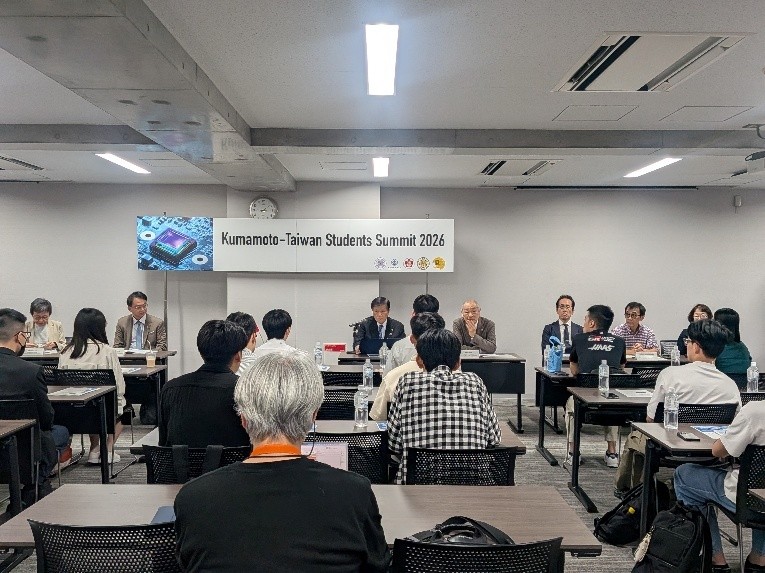
Opening Ceremony
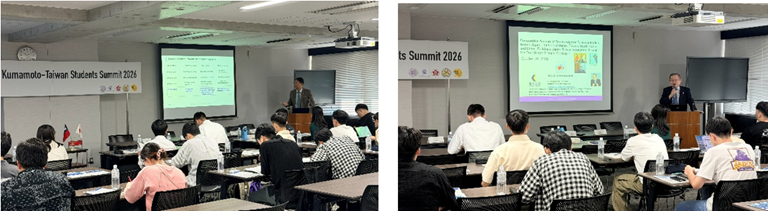 Lecture session
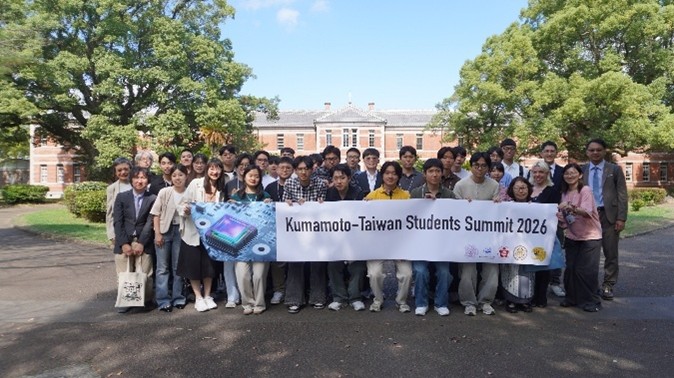
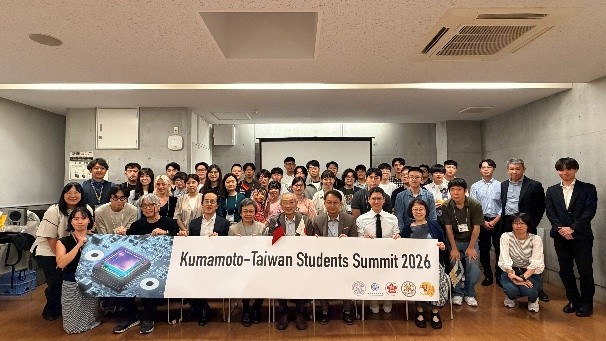
Group photo of participants and faculty members
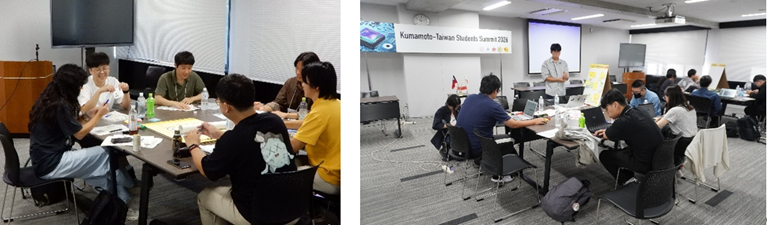
Group discussion among Japanese and Taiwanese students
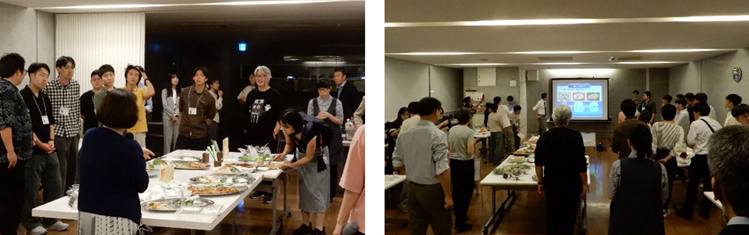
Welcome Banquet
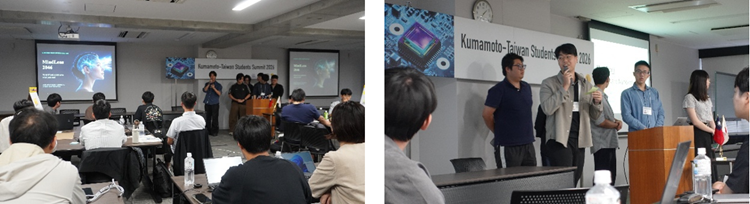
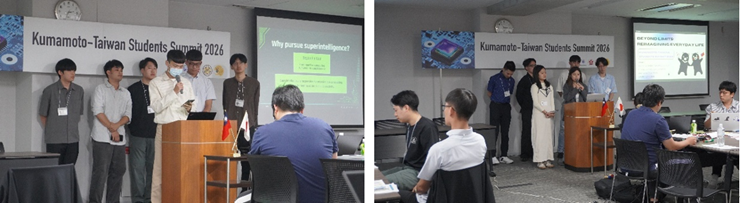
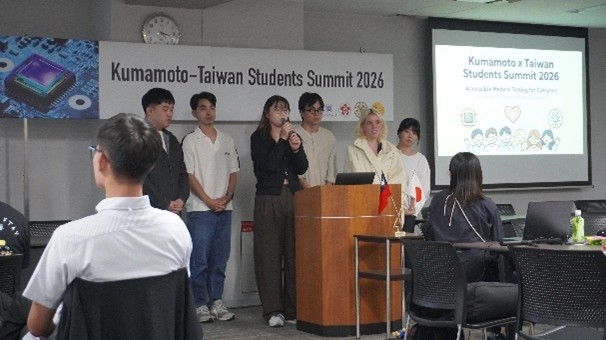
Group presentations
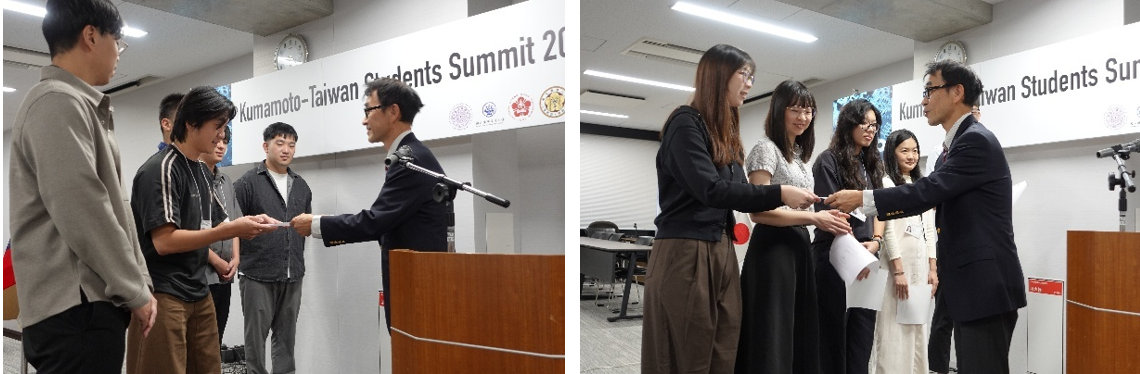
Ceertificate presentation at the closing ceremony
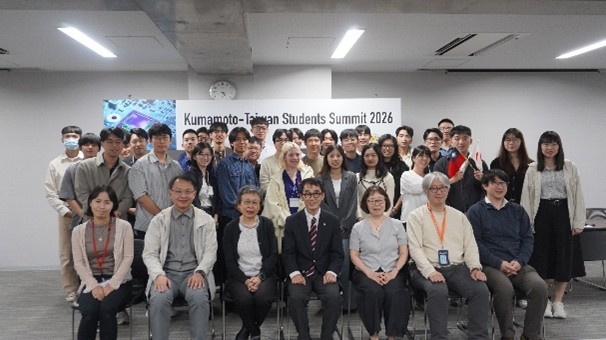
Commemorative photo after the closing ceremony
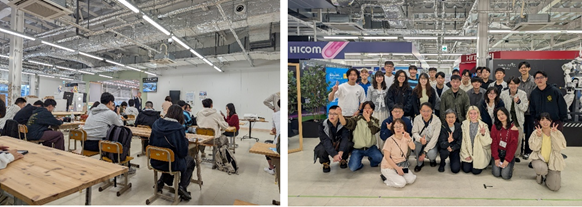
Visit to Kumamoto SDGs Mirai Park
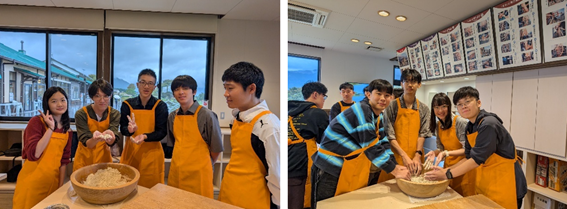
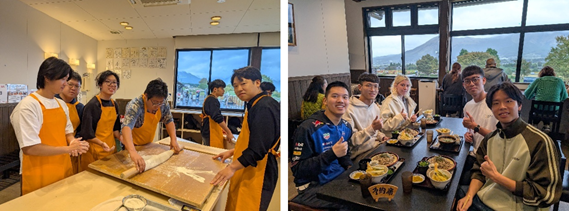
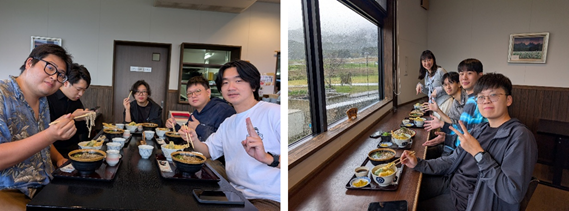
Soba-noodle making experience and lunch
Lecture sessionGroup photo of participants and faculty members
Group discussion among Japanese and Taiwanese students
Welcome Banquet
Group presentations
Ceertificate presentation at the closing ceremony
Commemorative photo after the closing ceremony
Visit to Kumamoto SDGs Mirai Park
Soba-noodle making experience and lunch